







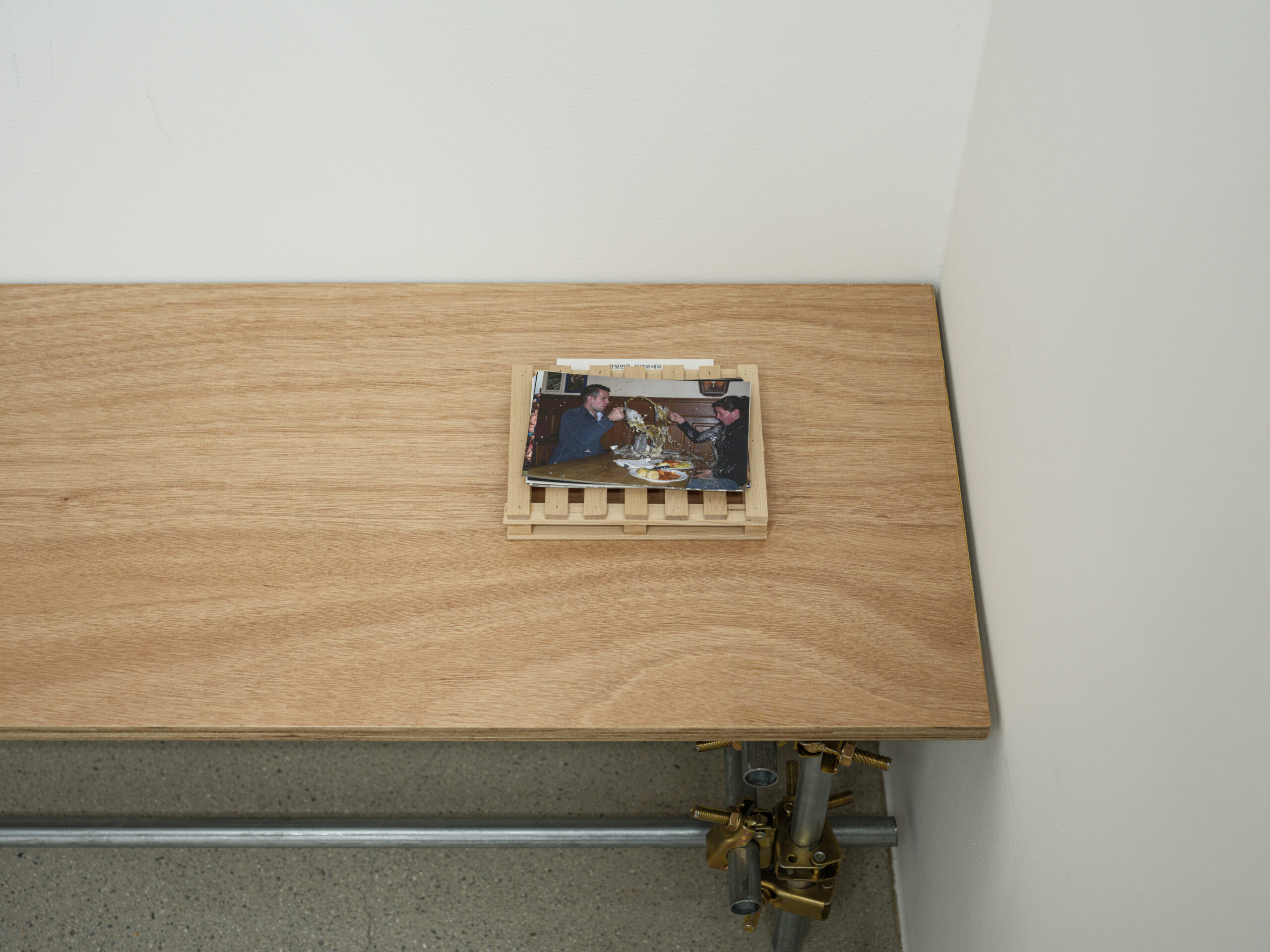



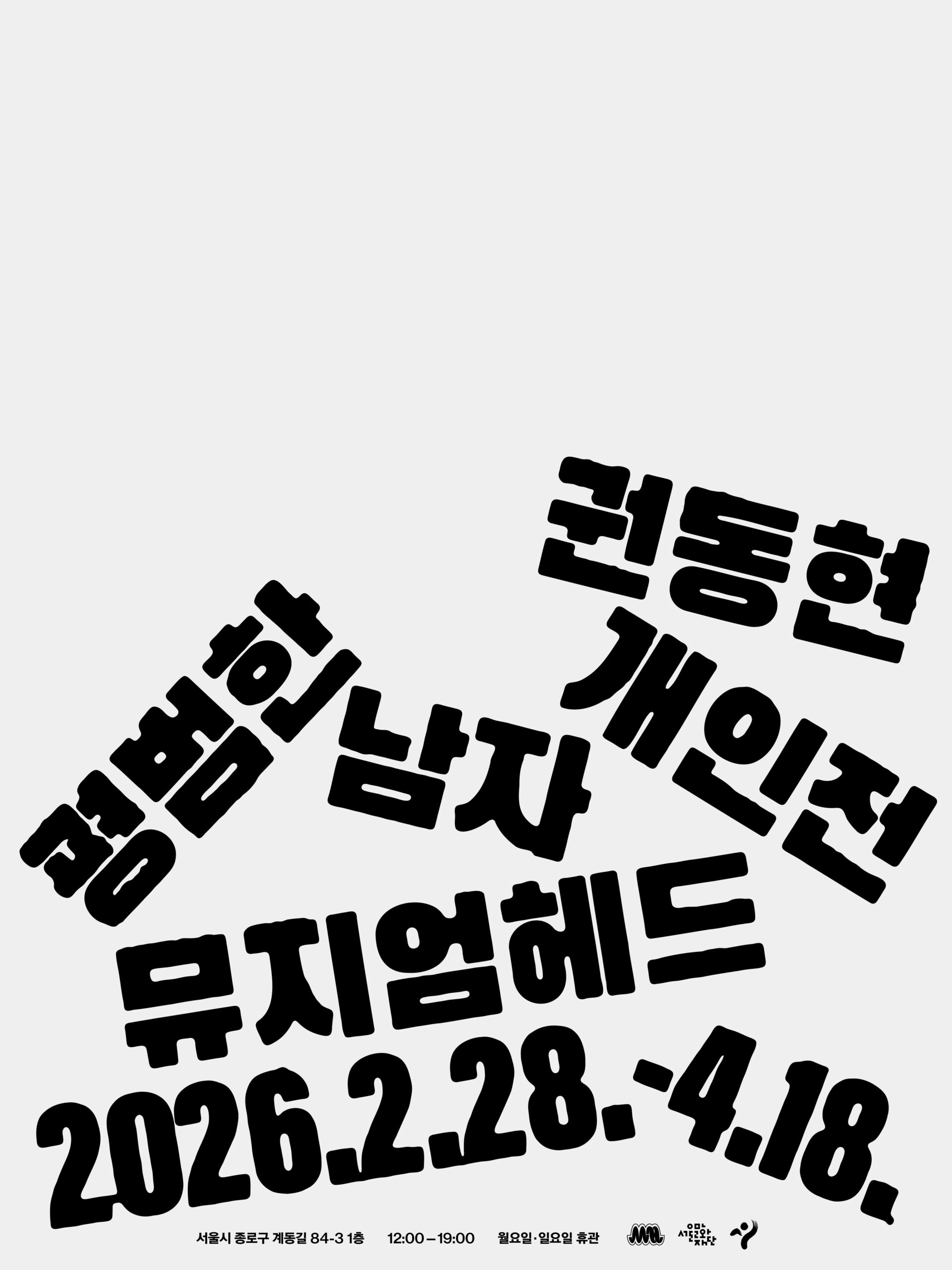
《평범한 남자》
권동현 개인전
2026.02.28 – 04.18.
12:00-19:00(일, 월 휴관)
기획: 허호정
진행: 권하정, 한희
그래픽 디자인: 인현진
전시 설치: 김병찬
도움: 구재회, 권세정, 서정은, 신익균, 염철호, 조형준, 최요한, 최주원
촬영: 홍철기
주최, 주관: 뮤지엄헤드
후원: 서울특별시, 서울문화재단
‘평범한 남자’라는 제목 앞에서 당신이 떠올린 이미지는 무엇인가. 그는 어떤 얼굴을 하고, 어떤 옷을 입고, 어떤 몸으로, 당신 앞을 서성이고 있는가?
재현이 대표성을 띨 때, 그것은 일종의 모델로서 사회에서 기능한다. 만약, 당신이 이 사회에서 통용하는 ‘보편적인 남자’의 얼굴이 있다고 본다면, 당신은 그것이 어떤 식으로든 이 사회에서 남성—그리고 그의 짝패라 여겨지는 여성—을 작동시키고 있다는 점을 인정하는 것이 된다. 그런데 만약, 당신이 보편적인 남자의 얼굴을 좀처럼 특정할 수 없다 말한다면, 어떨까? 그 텅 빈 이미지는 과거 모델의 실효가 다했다는 사실 외에 무엇을 더 말할 수 있을까?
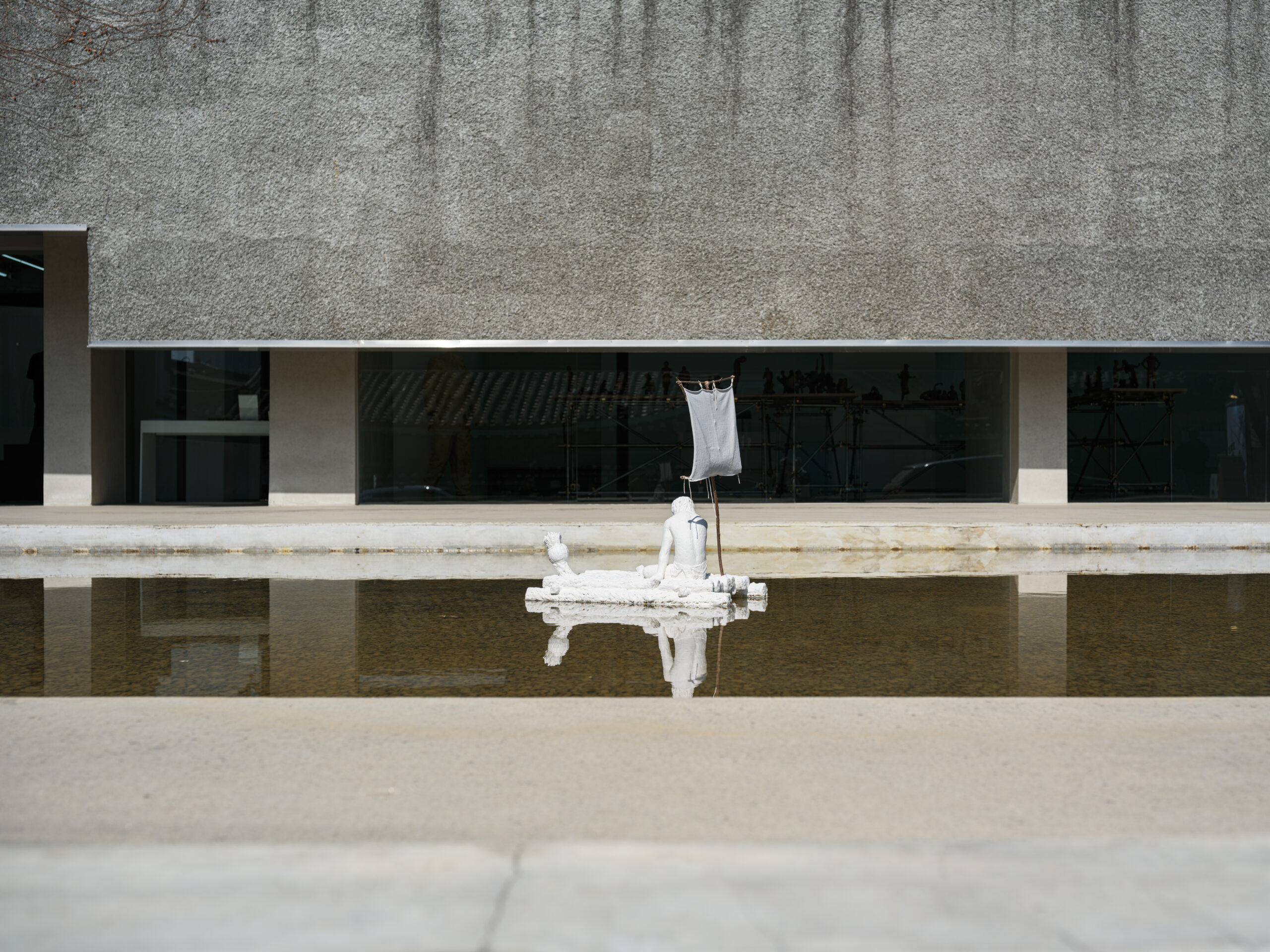
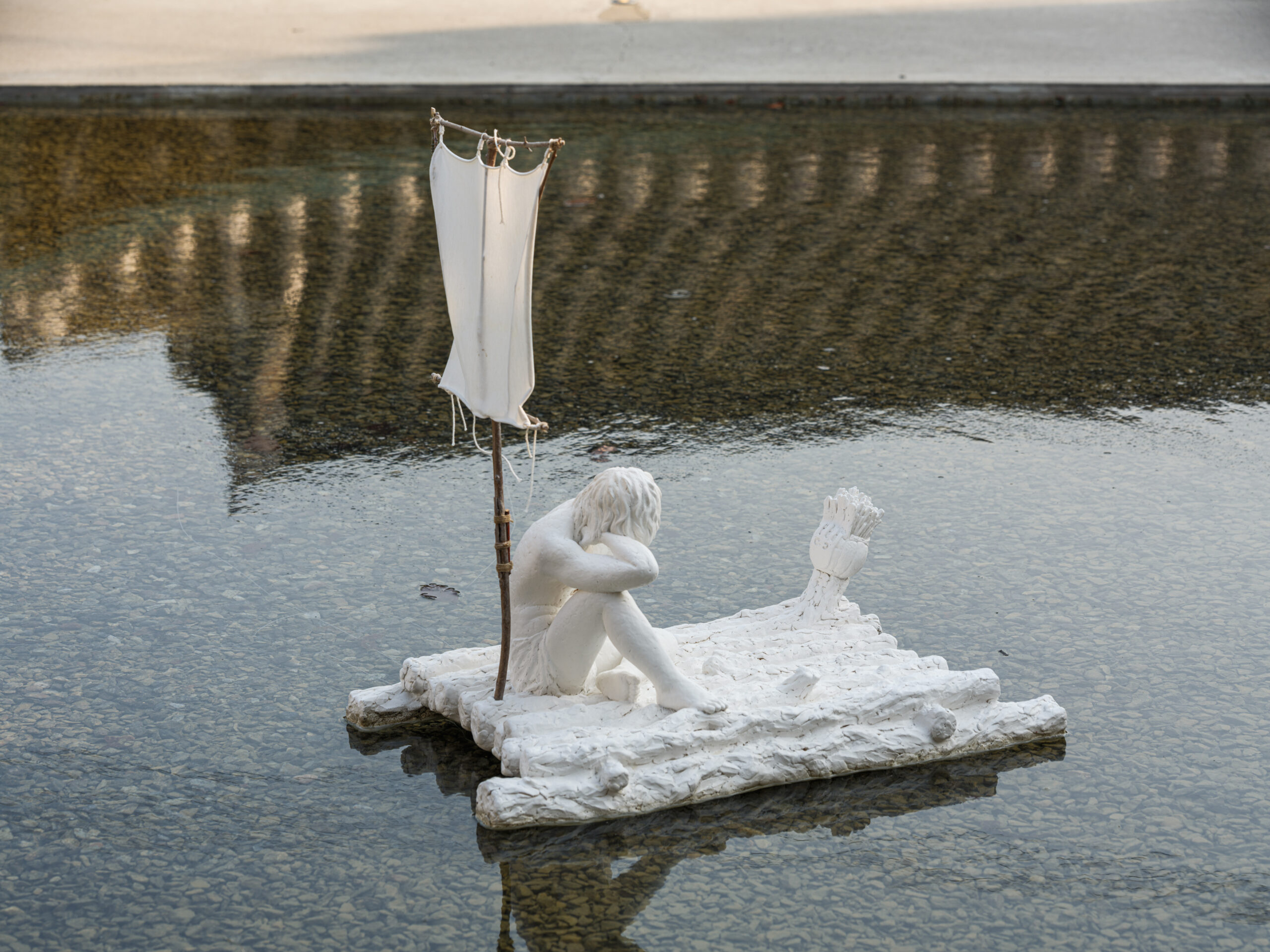
전시는 여기서 출발하고 나아간다. 텅 빈 이미지를 채우는 ‘평범한 남자들’을 기꺼이 그려보면서 말이다. ‘이대남 현상’, “젠더 갈등” … 대중의 정치적 우경화를 설명하기 위해 특정한 구도를 설정하고, 실체적 폭력을 뒤덮는 갈라치기를 종용하는 현실 정치의 수사가 일상을 잠식할 때, 이를 헤집는 남성 재현이 가능할지 들여다본다. 그리고 일렁이는 수면 위, 저 형상처럼 표류를 자처하며 질문한다. 백기를 단 뗏목 위의 ‘남자’는 누구인가? 그는 어디를 향하고 있는가? 그는 구조될까? 그는 어떻게 스스로 탈출을 감행할까?
권동현은 2000년대 초중반부터 지금까지 ‘남성성’의 도상들을 수집하고 있다. 그 범주는 전통적인 인체 모각에서 상정하는 고대 그리스적 이상의 신체로부터, 영화 〈람보〉 시리즈의 실베스터 스탤론처럼 전형적인 섹스 심볼의 근육질 몸, 웹 상에 유통하는 저화질의 아저씨 밈/짤방까지 다양하다. 이들 이미지는 남성 신체 · 얼굴 · 제스처 · 퍼포먼스의 전형성을 때로는 상찬하고 때로는 조롱하며 심지어 부정하는 면모를 보이기도 한다. 그리고 작가는 이러한 이미지를 문자 그대로 수집하는 데서 나아가 그것을 정성스레 빚어 입체로 세워놓는다.
《평범한 남자》를 구성하는 것은 이렇게 구현된 남자-몸-조각이다. 그리고 이들은 대체로 불편감을 자아낸다. 그 모양이 약간의 실소를 유발하긴 하지만 ‘귀여움’의 양식으로는 쉽게 이양되지 않고, 위협적이진 않으나 일상의 폭력적 순간을 떠올리게도 한다. 일테면, 취한 몸을 서로에게 기대어 걷는 남자들, 서로의 성기를 건드리며 친밀함을 표하는 남자들, 양다리 사이를 최대한 벌려 앉고, 상체는 한껏 부풀린 남자, 기이한 자세로 몸을 전시하고 묘기를 부리는 남자, 포즈를 취하고 무거운 것을 들며 힘을 자랑하는 남자, 대단한 근육질, 또는 매끈한 나체를 자랑하는 남자, 아무 데서나 서서 오줌을 싸는 남자, 근육을 빵빵하게 키워 터질 듯 조이는 옷을 입은 남자, 안경 쓴 “한남콘”, 어떻게 입어도 밈이 되는 “영포티”….
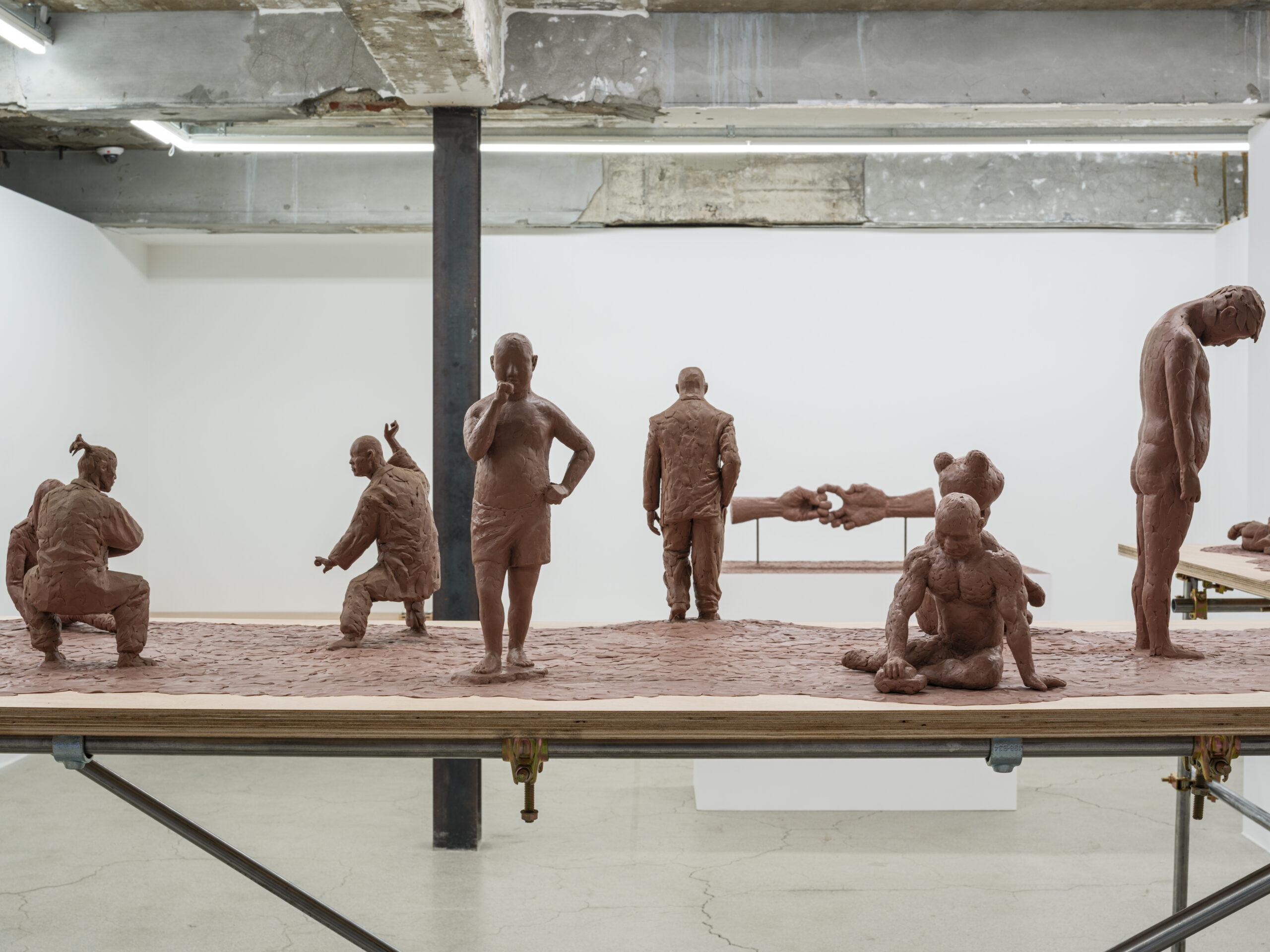
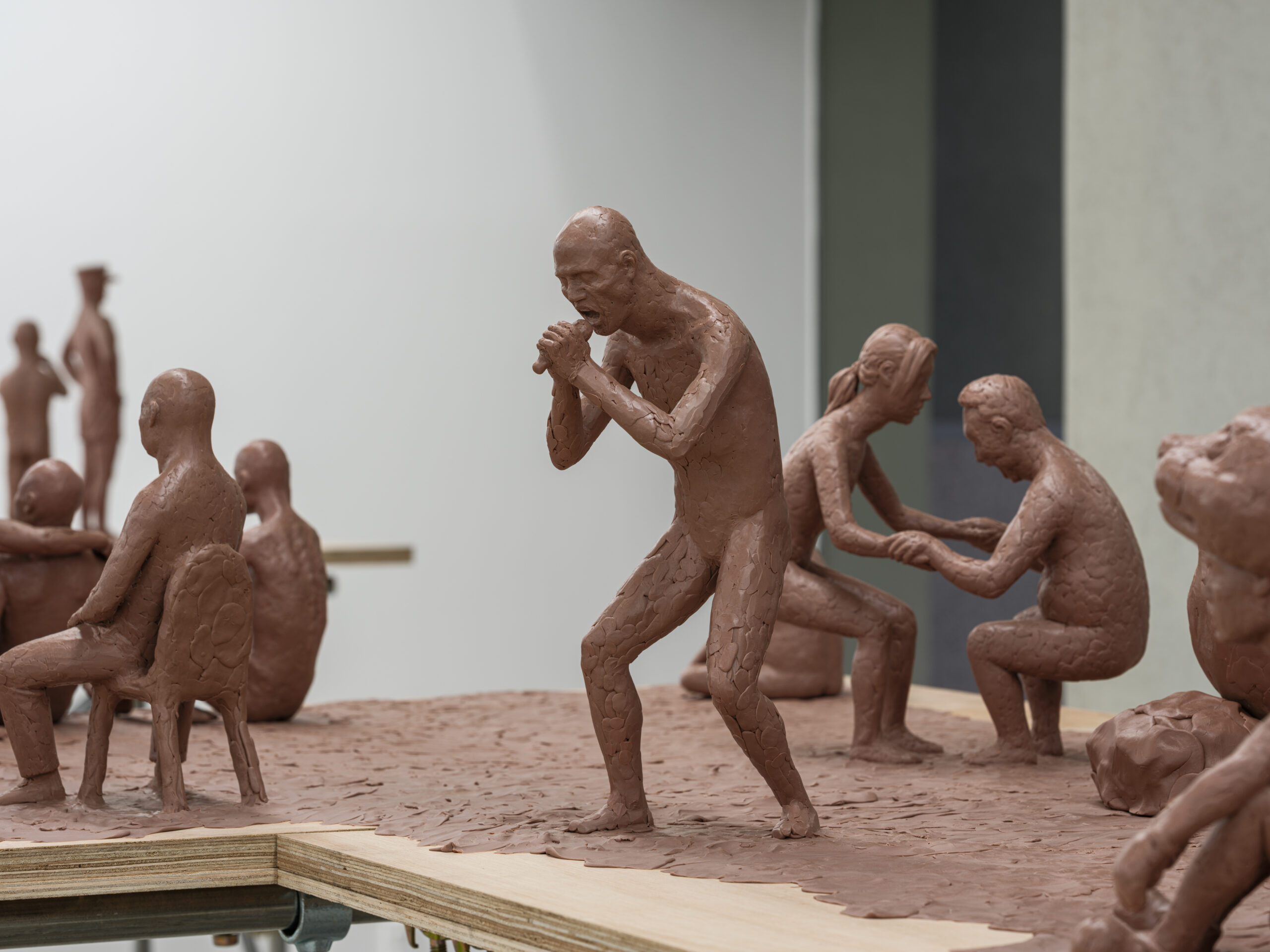
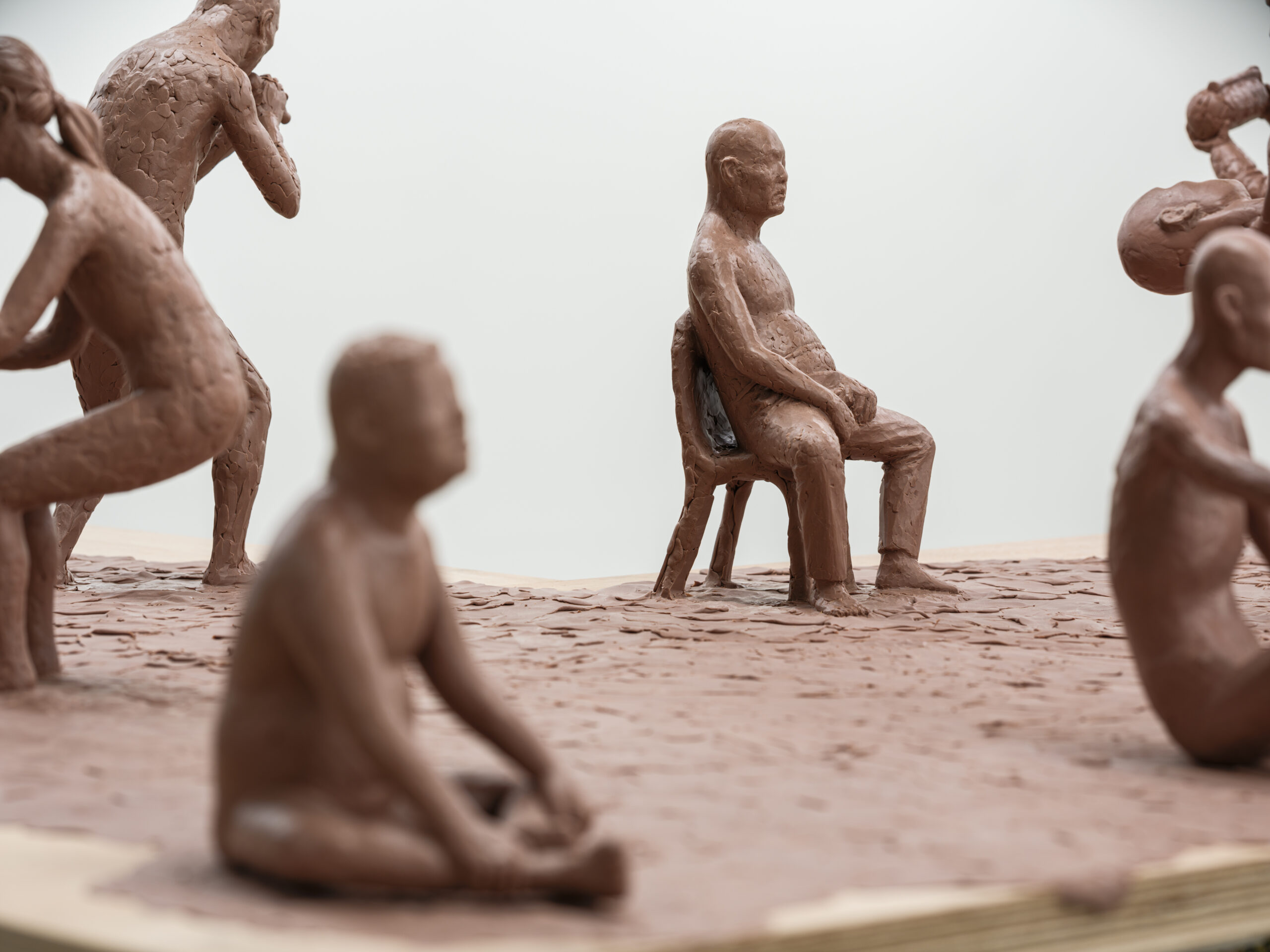
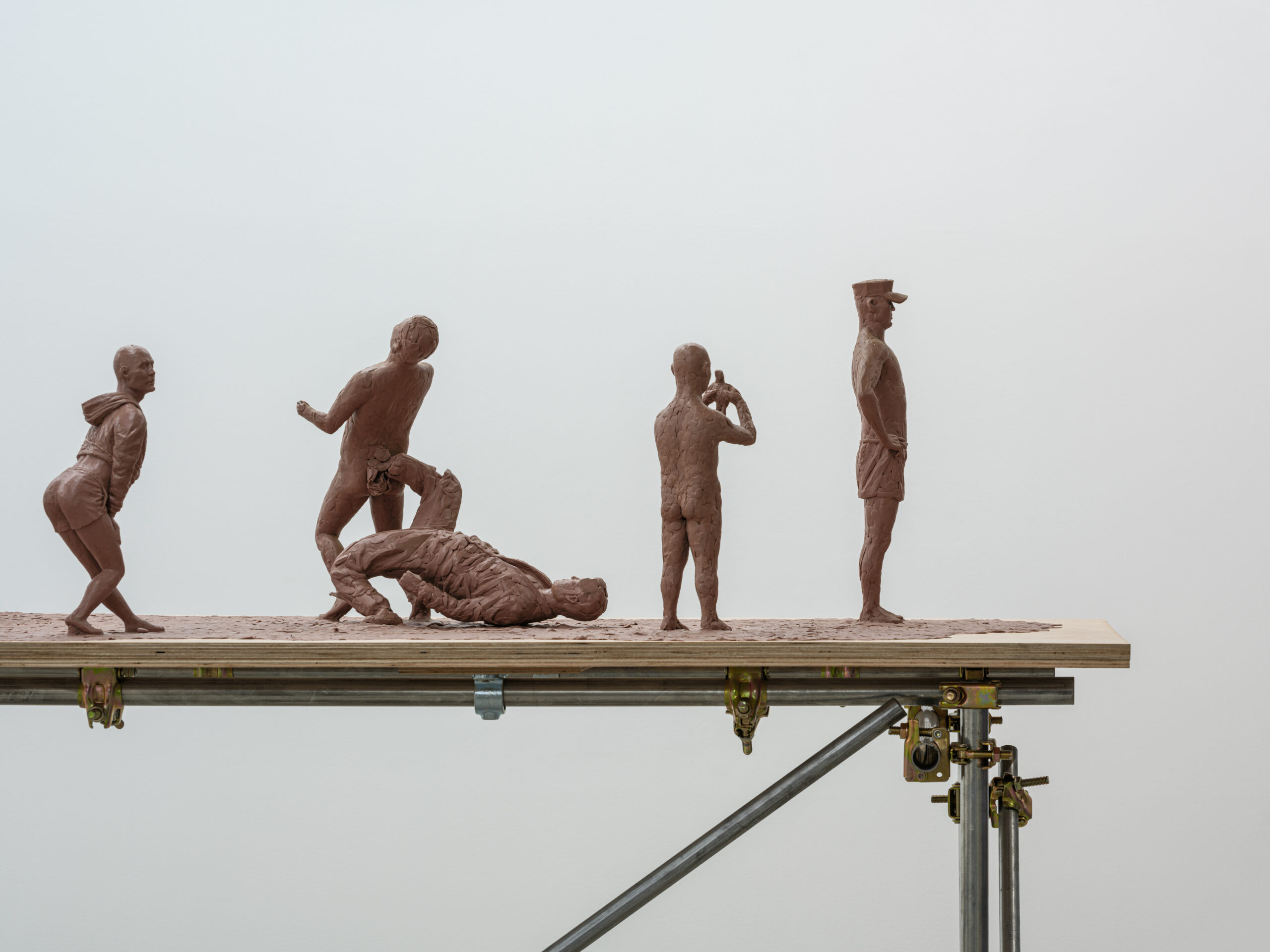
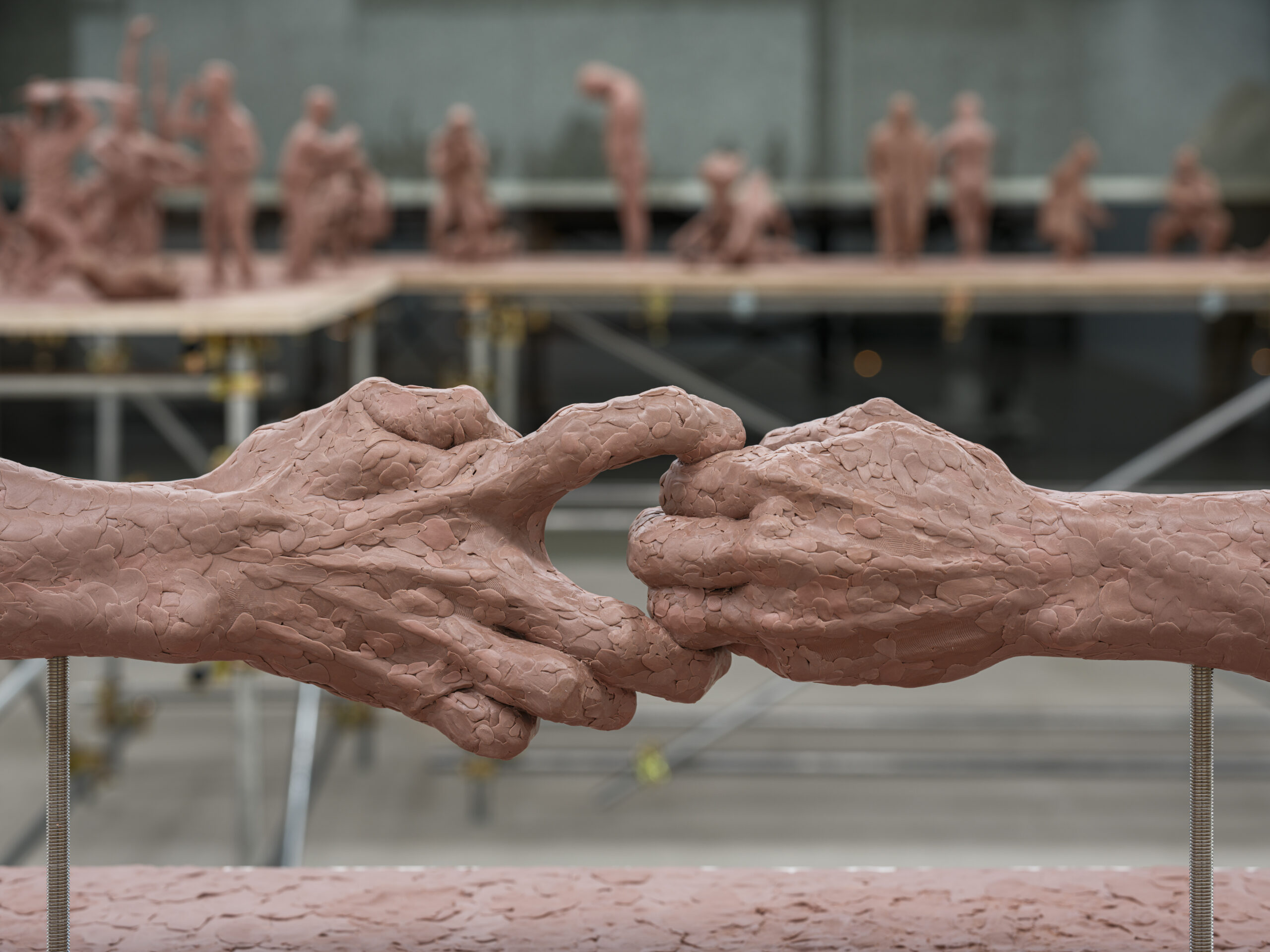
〈작은 아저씨들〉(2021-2026)은, 위와 같이, 일상에서 마주쳤다면 일단 고개를 젓고 볼 것만 같은 남자들을 한데 모아 만든 호모 소셜 군상 조각이다. 이 작업은 그 크기와 질료 양면에서 불편한 인상을 강화한다. 각각의 인형은 유토를 작게 떼어내 붙여 만든 덩어리로, 표면은 대개 울퉁불퉁하고 만들기의 흔적을 드러내고 있다. 다른 가공 역시 거치지 않아 언제든 일그러지거나 무너질 수 있는 가소적 상태로 놓인다. 대개 비슷한 스케일로 제작된 이 인형들은 하나의 땅—역시 유토로 만든—을 공유하고 서 있다. 하나하나로 보면 작은 인형일진대, 이것들이 같이 모여 있으니 매끈하게 마감되지 않은 흙의 감각만큼이나 찐득하고 징그럽게 느껴진다.
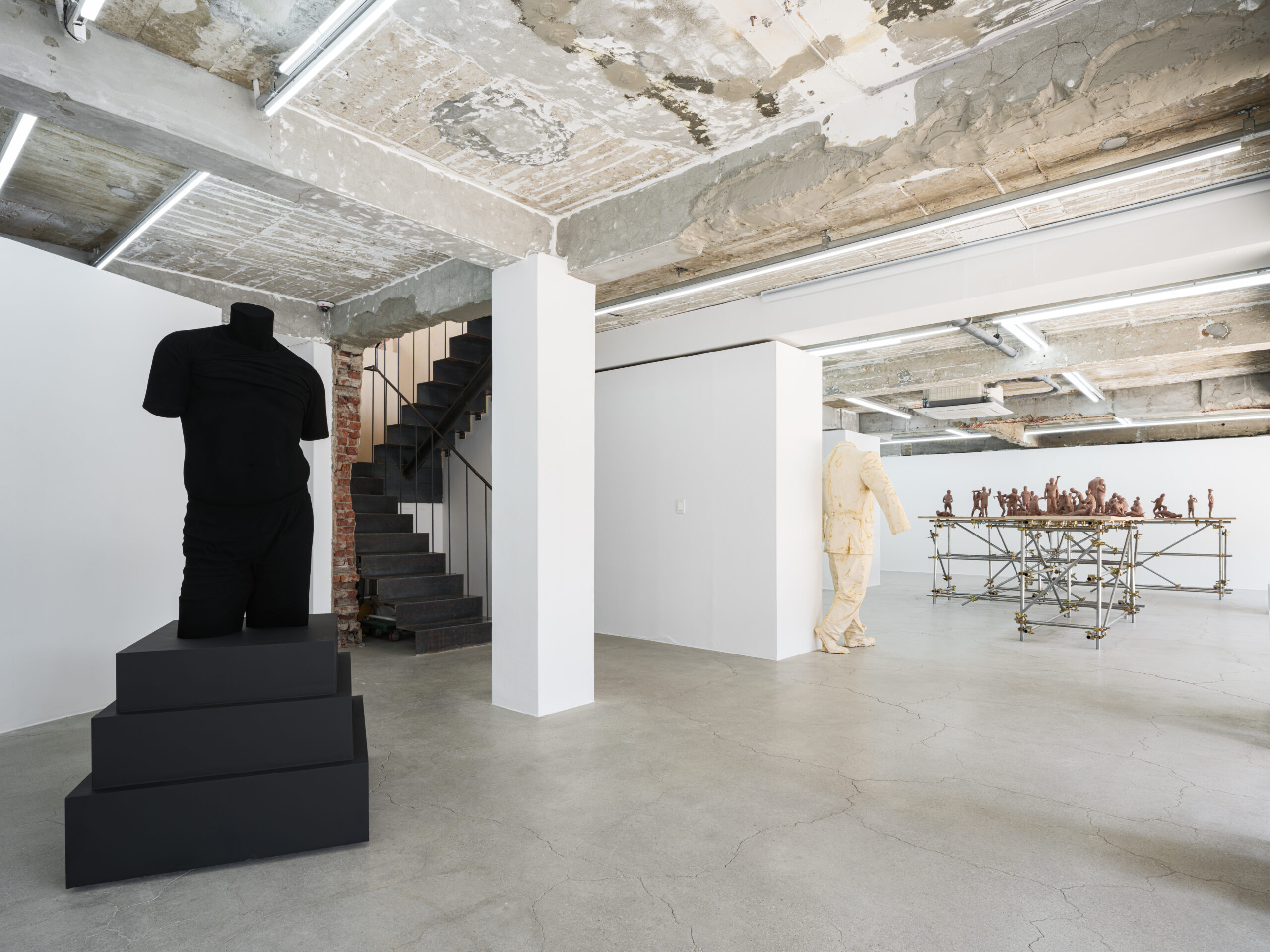
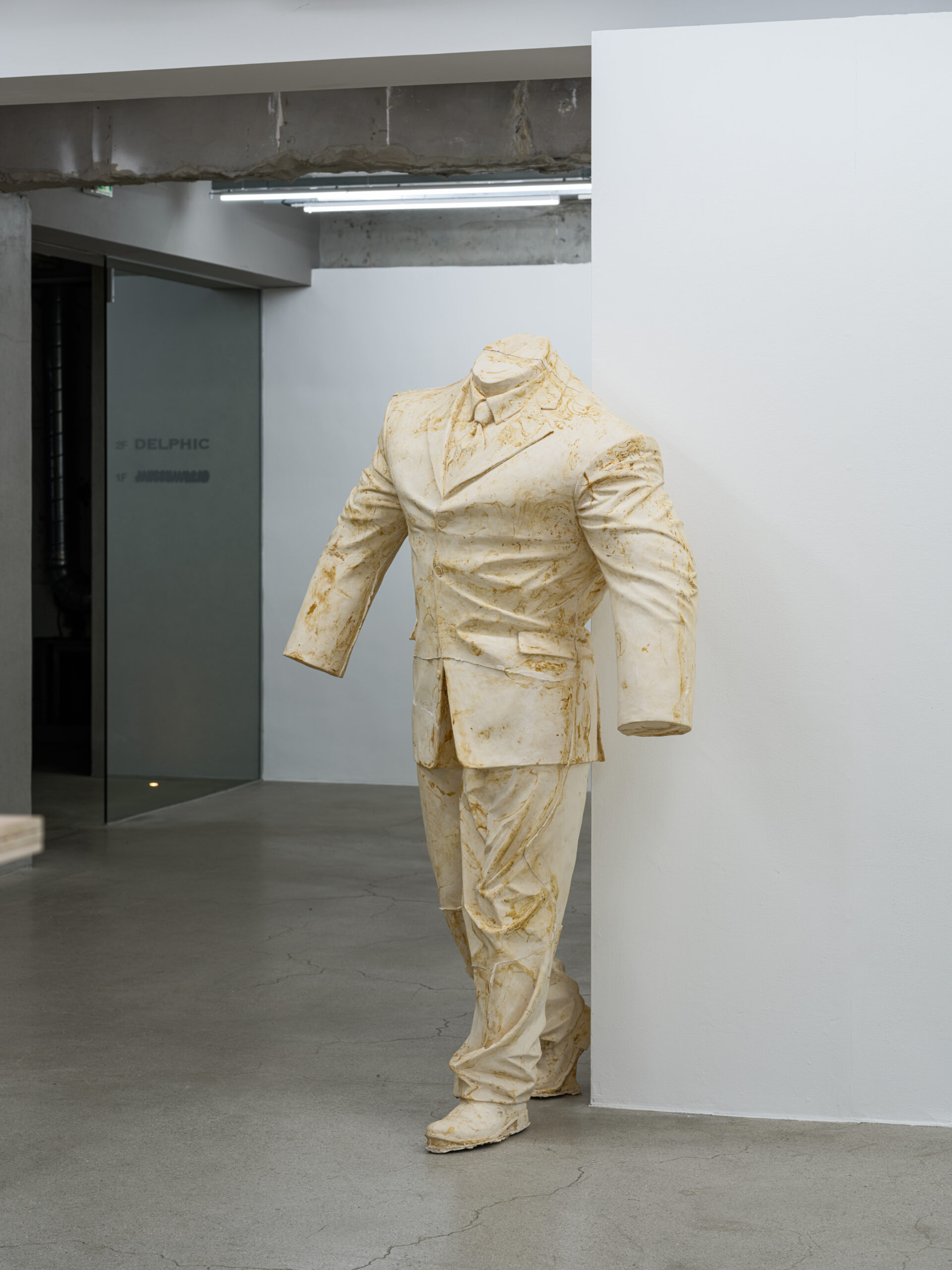
스케일이 실제 인체 크기에 육박하며 비교적 매끈한 표면을 한 〈베이징 비키니〉(2018-2026)나 〈근육 정장〉(2021)의 경우에도 불편감은 예외가 없다. 각각은 상의를 가슴팍까지 걷어 올려 배를 드러낸 남자의 토르소와, 지나치게 키운 근육 때문에 정장 차림이 터질 듯 꽉 끼게 된 남자의 전신상이다. 이들 작업은 남성상의 이상을 기념비적으로 묘사하기보다, 그것이 비대해진 결과, 추를 마주하게 만든다. 심지어 정성스런 조형이 역설적으로 느껴질 만큼, 미적인 쾌는 뒤로 미뤄지는데, 〈베이징 비키니〉의 빛을 흡수하는 검은 표면과 〈근육 정장〉의 흙을 묻힌 누런 표면은 모두 매끈한 감상을 적극 거부하는 모양새다.
권동현의 남자-몸들은 미적 · 사회적 규범성에서 탈각되어 있다. 이는 우선, 그가 묘사의 주제로 삼는 남자들이 처한 곤란한 상황에 기인한다. 그것은 개인으로서 남성 주체가 ‘남성성’의 상상적 지평에 붙들려 있음으로써 맞닥뜨리는 갖가지 양상으로 나타난다. ‘남성성’을 형상화하다 못해 그것을 배반하게 된, 저열하고 남사스럽기까지 한 이미지들이 그것이다. 남성상의 형제들, 남성성-들.
애초에 이들의 목표는 남성성의 원형과도 같은 강인한 육체, 강인한 정신, 단독자로서의 자율성을 성취하는 데 있었을 것이다. 그러나 그 표상은 파생적 속성을 얻어 다양하게 증식하고 굴절한다. 근육의 과시, 싸움과 경쟁의 능숙함, 감정을 억누르는 이성, 무신경함과 저돌성 등. 문제는 이를 구체화하는 과정에서 그 표상이 남성성 자체를 배반하는 지점이다. 과하게 부풀려진 몸은 남성기의 기능을 위협하고, 단독자는 철저한 외로움에 시달리게 되며, 이성과 인내에 집착한 끝에 주체는 히스테리적 증상을 드러낸다. 남성성은 안정되기는커녕, 과잉과 균열을 내장한 채 돌연변이를 낳기에 이른다.
돌연변이에 대한 기묘한 애착을 품는 동시에 이를 작업으로 가져오면서 작가는, 다양하고 복잡미묘한 감정을 마주해야 했다. 시스젠더 남성인 자신의 얼굴, 몸, 태도, 제스처, 이데올로기 등을 이 이미지들에 투사하지 않을 수 없었을 것이다. 자기 관찰이자 비평의 여정, 그 안에서 느낀 ‘자괴감, 자조’ 등을 쉬이 떠올릴 수 있다. 이런 단어들은 그의 노트에도 등장한다.
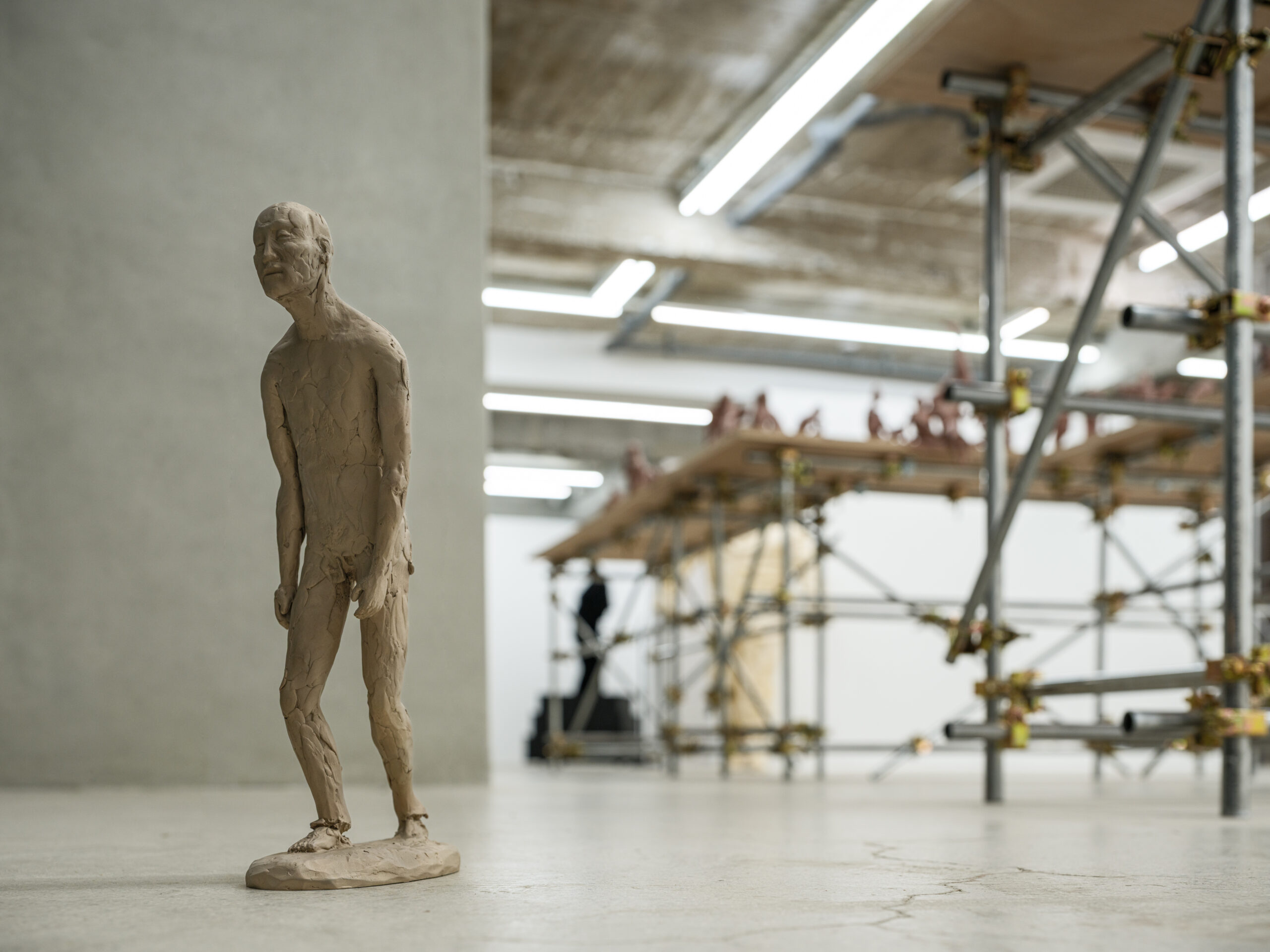
그러나 더욱 중요한 것은, 자기 투사와 확인의 과정을 넘어 일종의 사회적 성찰을 취하려는 그의 노력이다. 〈자소상〉(2026)은 이러한 일련의 과정을 집약한다. ‘거울 보기’를 즐기지 않는다는 그가, 거울 앞에서 긴 머리를 동여매는 중인 전라의 자기를 이곳에 세울 때, 그것은 무엇을 담고 또 튕겨내고 있을까?
“자소상을 만들며 조소과 학부 시절 인체 모델링 수업에서 만들던 남성의 몸들이 떠올랐습니다. 당연히 해부학 책에서 봤던 남성의 신체도 생각났어요. ‘표준’이라고 여겨지는, 적당히 근육이 있고 근육의 형태가 보일 정도로 마른 체형의 남성 몸. 그리고 그것과 너무나 다른 저의 몸이 거울 안에 비쳐 있었습니다.
거울로는 관찰이 충분하지 못해 알몸의 저를 다양한 각도에서 사진 찍고 천천히 살펴보기도 했습니다. 저의 몸은 종종 해부학적으로 ‘틀린 것’처럼 보이기도 합니다. (…)”
〈자소상〉의 몸은 저자(the author)의 권위를 폐기하는 것은 물론이요, ‘자기’를 무대가 아닌 해부대 위에 올려다 놓는 가학성을 택하고, 어떤 표준적 남성상의 비작동을 확인시킨다. 이것은 ‘특성 없음’을 넘어선다. 말하자면, 근대적 예술의 ‘주인공’ 유형이 가지고 있는 몰개성, 말하자면 흠 없는 보편성을 벗어나는 것이다. 그리하여 ‘평범한(ordinary)’이라는 수식은 이상에 가까운 공통성, 정상성을 가정하는 보편(universal)과는 달리, 어딘지 부족하거나 모자라는 듯도 하고, 심지어 (수적으로나 질적으로나) 남아 도는 여분의 것, 찌꺼기 같은 것을 시사한다. 우리는 이 찌꺼기적 성질로서 평범함이 단순한 ‘실패’가 아님을 알아야 한다.
대중 문화에서 재현된 남성이 ‘아버지’(권위주의적 가부장 주체)의 몰락과 좌절을 그리는 듯하다 다시 그 자리만 확인하거나, 남성성의 부정형으로서 여성성을 모방하는 무해한 남자—역설적으로 남성성을 수호하는 남자—를 낭만화하는 동안, 복수(plural)의 남성성을 탐구하는 연구자들은 특정 논리를 따르는 남성 표상이 실패할 수밖에 없으면서도 다시 거기 속박되는 구조적 모순을 지적했다. 이들은 개별 주체로서 남자들이 자본주의 사회의 요청에 따르는 ‘남성성’을 수행해 내지 못하는 필연성을 실존의 근본적인 취약성과 잉여적 위상에서 확인한다. 점점 더 미시적으로 작동하는 자본의 논리에 의해 걸러진, 찌꺼기들.
“‘루저됨’을 즐길 수는 없는 걸까요?” 권동현의 이 같은 물음은, 필패하는 게임의 지평을 다시 보게 만든다. 실패는 다른 말로 바꿔 쓰여야 한다. 그것을 개인의 책임이자 좌절로 읽어야 했던 주체들은 다시 얼굴을 드러내야 한다. 여기서 작가는 어딘지 모자란, 혹은 너무 넘쳐서 남아 돌게 된 잉여의 ‘평범함’을 떠올리고 긍정하며 유희해 본다.
물론, ‘루저됨’을 즐길 수 있는 사람은 없을 것이다. 하지만 적어도 자신의 ‘루저됨’이 이 자본주의의 폐단에 의해 빚어진 무수한 패배, 매일 같이 양산되는 쓰레기적 성질에 공명하고 있다는 자명한 사실을 인식할 필요가 있다. 그가 느끼는 좌절, 스스로의 못남과 추함, 수치심 따위가 개인의 탓 혹은 상상의 적(가짜 적) 탓이 아니라는 점을 확인할 필요가 있다. 그렇게 되면, 또 다른 패배들과 마주하고 손잡을 수 있는 여지가 열리고, 패배와 취약함을 ‘남성’과 대립시키는 기만적 부정으로 돌아갈 이유도 없어질 것이다.
어쩌면, ‘평범한 남자들’을 그리겠다는, 그 일을 지속하겠다는 다짐은 이 출구 없는 세계에서 ‘찌꺼기’의 위상을 다시 쓰기 위한 것일지도 모른다. 자, 이제 맨 처음 던진 질문을 다시 던져본다. 당신의 머릿속에 떠오른 그 ‘평범한 남자’는 누구인가? 그는 어떤 얼굴을 하고 있는가?
기획/글 허호정
[1] “’한남콘’은 2014년 3월 서울 마포구 한 안경점 대표 홍모(43)씨가 그린 그림이다. 얼굴이 큰 사람에게 어울리는 안경테를 추천해주려는 뜻으로 직접 그린 그림이라고 했다. 원래 그림 별명도 ‘안경남’이었다. (…) 뜻밖의 상황을 맞은 건 작년부터다. ‘워마드’ ‘메갈리아’ 같은 커뮤니티에 이 그림이 올라오면서 ‘한남콘(한국 남자 이모티콘)’이라는 별명을 얻게 됐다. (…) ‘안경남’을 처음 그렸던 홍씨는 지난달 해당 그림을 ‘얼큰남(얼굴이 큰 남자)’이라는 이름으로 저작권 등록했다. 네티즌들의 무단 사용을 막기 위해서다.”: 김상윤, 「‘한국남자 평균’ 조롱 그림… 알고 보니 안경점 광고」, 『조선일보』 문화일반, 2018-07-24, https://www.chosun.com/site/data/html_dir/2018/07/23/2018072302945.html.
[2] “”젊어 보이려고 발악하는 아저씨 같은 이미지가 떠올라요.”/ “시간이 흐르는 걸 인정하지 못하는 사람들 같아요.”/ ‘영포티(Young Forty·젊은 40대)’를 떠올리면 어떤 모습이 그려지느냐고 묻자, 청년들에게서 이런 답이 돌아왔다. 온라인에서는 ‘스윗 영포티’처럼 젊은 여성의 호감을 사려는 40대를 비꼬는 파생 표현이 등장했고, (…) ‘영포티’라는 단어가 처음부터 부정적인 표현은 아니었다. 이 용어는 2010년대 중반 마케팅 업계에서 사용되기 시작했고, 당시에는 ‘젊은 감각과 소비 성향을 갖춘 40대’를 가리켰다.” 김효정, 「한국에서 ‘영포티’는 왜 조롱의 대상이 됐을까」, 『BBC 뉴스 코리아』, 2025-12-21, https://www.bbc.com/korean/articles/c1dz6zzk37qo.
[3] 권동현, 〈남성에 대해 생각하며〉(2026) 중. 이하, 별다른 언급이 없는 인용은 같은 출처에서 왔다.
[4] 〈서울 자가에 대기업 다니는 김 부장 이야기〉(2025, jtbc 방영 드라마)에서 ‘김낙수(류승룡 분)’나, 〈어쩔수가없다〉(2025, 박찬욱 감독)의 ‘유만수(이병헌 분)’의 경우를 떠올려 볼 수 있다.
[5] 이성애적 연애 관계를 장려하는 풍토 속에 등장한 남성 유형으로 ‘에겐남’을 들 수 있다. 그것의 쌍 개념으로 ‘테토남’, ‘테토녀’, ‘에겐녀’가 있다. 이 같은 분류는 소위 ‘연애 리얼리티 프로그램’의 범람과 유행에 따라 강화되고 규범화된다.
[6] 스기타 슌스케는 계급, 섹슈얼리티, 지역, 세대, (비)장애 등의 다양한 정체성을 가진 현대의 남성들이 자신의 취약성을 확인하게 되는 지점을 들여다본다. 그러면서, 백래시로서 여성에 대해 자신의 ‘피해’를 호소하는 경우가 아니라, 자본주의 논리의 끝에 내몰린 취약한 실존으로서 남성을 ‘약한 남자’로 호명한다. 안희제는 한국 사회의 구조적 문제를 확인하면서, K-질서로부터 유기되고 이탈되는(패배감) 청년 남성이 그럼에도 거기서 벗어날 수 없다고 느끼는 무력감(속박감)에 주목했다: 스기타 슌스케(명다인 역), 『자본주의 사회에서 남성으로 산다는 것 — 승자도 패자도 아닌 존엄한 인간으로 사는 21세기 남성학』(또다른우주, 2023); 안희제, 『증명과 변명 — 죽음을 계획한 어느 청년 남성이 남기는 질문』(다다서재, 2024).
[7] 바우만은 전지구적 자본이 그 논리에 부합해 작동하지 못하는 삶들을 ‘쓰레기’로 규정하고 양산하는 과정을 지적한 바 있다. “‘인간 쓰레기’, 좀 더 정확히 말하면 쓰레기가 된 인간들(‘잉여의’, ‘여분의’ 인간들, 즉 공인받거나 머물도록 허락받지 못했거나 다른 사람들이 그것을 바라지 않는 인간 집단)의 생산은 현대화가 낳은 불가피한 산물이며 현대(성)에 불가피하게 수반되는 것이다.” 지그문트 바우만, 『쓰레기가 되는 삶들 – 모더니티와 그 추방자들』(새물결, 2008), 22.
An Ordinary Man
GWON Dong-hyun solo exhibition
28.Feb. – 18.Apr.2026.
12:00-19:00(closed on Sun, Mon)
Curated by KWON Hyukgue
Curatorial Team: KWON Hajeong, HAN Hui
Graphic Design: In Hyunjin
Technical support: KIM Byungchan
Hosted and Organized by Museumhead
Supported by Arts Council Korea
Thanks to KOO Jaehoe, KWON Seajung, Seo Jungeun, Shin Ikkyun, Yeom Chulho, JO Hyeongjun, Choi Yohan, Choi Juwon
Photo by HONG Cheolki
What image came to mind when you first encountered the title “Ordinary Man?” What kind of face does he have? What clothes is he wearing? What body does he possess as he paces around you?
When a representation embodies a sense of typicality, it begins to function as a societal model. If we believe in a “universal male face” circulating within society, we are acknowledging its power to organize the category of “men”—and, by extension, the “women” presumed to be their counterparts. But what if that universal face becomes impossible to specify? What more could such an empty image reveal, beyond the simple fact that past models have lost their validity?
This exhibition begins at that very point of vacancy. It moves forward by willingly attempting to populate that empty image with the presence of “ordinary men.” Today’s Realpolitik employs frameworks like the “20s-something male phenomenon(이대남 현상)” and “gender conflict” to explain a shifting political landscape, often setting up a divisive rhetoric that obscures tangible violence as it seeps into everyday life. Against this backdrop, the exhibition asks: is it possible to produce a representation of man that disrupts this very order? On this wavering surface, the figure asserts a sense of drift, posing urgent questions: Who is the “man” standing on the raft with a white flag? Where is he heading? Will he be rescued—or how will he attempt to escape on his own?
Since the mid-2000s, GWON Dong-hyun has been archiving iconographies of masculinity. His sources are vast, ranging from the idealized bodies of ancient Greek sculpture found in traditional anatomical modeling to the hyper-masculine physique of sex symbols like Sylvester Stallone in First Blood, and even extending to low-resolution memes of middle-aged men. These images at times celebrate the typicality of male bodies, faces, and gestures, while at others, they mock or outright negate them. Rather than merely collecting these figures, the artist meticulously translates them into tangible, three-dimensional forms.
What composes An Ordinary Man are these embodied sculptures of male bodies. And they tend for the most part, to evoke discomfort. Their appearance may provoke a slight chuckle, but they do not easily translate into the aesthetic of “cuteness.” They are not threatening, yet they can recall violent moments embedded in everyday life. For example: man leaning drunkenly on each other as they walk; man expressing intimacy by touching each other’s genitals; man sitting with his legs spread as wide as possible with his chest puffed out; man displaying his body in bizarre poses and performing tricks; man posing or lifting heavy objects to show off his strength; man boasting exaggerated muscles or a sleek nude body; man urinating while standing anywhere; man wearing clothes stretched to the brink by his pumped-up muscles; the bespectacled “Han-nam-con”[i]; the “Young Forty”[ii] who becomes a meme no matter what he wears.
My Little Messieurs (2021–2026) gathers the very figures one might instinctively dismiss with a shake of the head in everyday life, reassembling them into a homosocial crowd sculpture. This work intensifies discomfort through both its scale and its material. Each figure is formed by attaching small pieces of oil clay, revealing the traces of making through their generally rough surfaces. They proceed with no further finishing processes and remain in a plastic state that could easily distort or collapse at any moment. These figurines, usually produced at similar scales, stand upon a shared ground which is also made of oil clay. They may be small figures individually, but gathered together they feel sticky and grotesque, much like the unpolished sensation of raw clay itself.
Even in works approaching the scale of the human body and possessing relatively smooth surfaces such as Beijing Bikini (2018–2026) and Muscle-Suit (2021), the sense of discomfort remains. Each is the torso of a man who has rolled up his shirt exposing his belly, and a full figure whose suit is stretched to the point of bursting due to excessively enlarged muscles. Rather than commemorating an idealized male figure, these works confront the viewer with the grotesque result of its enlargement. As if sincere craftsmanship feels paradoxical, aesthetic pleasure becomes postponed. The black surface of Beijing Bikini, which absorbs light, and the yellowish surface of Muscle Suit, which is smeared with clay, seem to actively refuse smooth aesthetic appreciation.
GWON Dong-hyun’s male bodies are detached from both aesthetic and social norms. This stems, primarily, from the precarious situations faced by the men he depicts—a series of manifestations encountered as male subjects, as individuals, remain tethered to the imaginary horizon of “masculinity.” These are images that strive to embody masculinity only to betray it, resulting in forms that are base, or even embarrassing. They are the “brothers” of the male figure: masculinities.
From the beginning, their goal may have been to achieve the archetype of masculinity: a strong body, a strong spirit, and the autonomy of the lone individual. Yet these representations acquire derived attributes and multiply in diverse and distorted forms—displays of muscle, skill in fighting and competition, rationality that suppress emotion, insensitivity and recklessness… The problem arises when these representations betray masculinity itself in the process of embodiment. An excessively inflated body threatens the functionality of the male organ; the lone individual suffers from profound loneliness; and an obsession with rationality and endurance leads the subject to hysterical symptoms. Rather than stabilizing itself, masculinity produces mutations, carrying excess and crack within it.
While harboring a peculiar attachment to mutation and incorporating them into his work, the artist had to confront various and complex emotions. As a cisgender man, he could not help projecting his own face, body, attitude, gestures, and ideology into these images. It is easy to imagine the journey of self-observation and critique, along with the feelings of “self-loathing” and “self-mockery.” These words even appear in his notes. [iii]
However, his effort trying to move beyond self-projection towards a form of social reflection is furthermore important. Self Portrait (2026) condenses this entire process. The artist, who says he does not enjoy looking at himself in the mirror, places a nude figure of himself tying his long hair in front of a mirror. What does this gesture contain, and what does it repel?
“While working on Self Portrait, I was reminded of the male bodies I once sculpted in figure-modeling classes as an undergraduate. And of course, I also thought about the male bodies in anatomy textbooks. The standard male body—somewhat muscular, lean enough for the muscles to be visible. And I saw my body inside the mirror, so different from it.
Observing through the mirror was not enough, so I photographed my naked body from various angles and examined it slowly. My body sometimes appears to be anatomically incorrect. (…)”
The body in Self Portrait not only abolishes the authority of the author; it also chooses the sadism of placing the “self” not on a stage but on an autopsy table, revealing the malfunction of the standardized male image. This goes beyond “lack of characteristics.” In other words, it departs from the flawless universality—the impersonality of the protagonist in modern art. Thus, the modifier ‘ordinary’ suggests something different from the universal, which assumes an ideal commonality or normality. Instead. It implies something lacking or insufficient, or even an excess left over—surplus, residue. We must understand that ordinariness, as residual quality, is not simply a “failure.”
While popular culture repeatedly depict male figures that seem to portray the collapse of the “father” (the authoritarian patriarch) only to reaffirm his position,[iv] or romanticizes harmless men who imitate femininity as the negative form of masculinity—thereby paradoxically protecting masculinity,[v] scholars investigating the plural, “masculinities” have pointed out the structural contradiction in which representations of masculinity inevitably fail while remaining bound to the same logic.[vi] They locate the inevitability that individual men cannot successfully perform the ‘masculinity’ demanded by capitalist society in the fundamental vulnerability and surplus status of human existence. Filtered by the increasingly microscopic logic of capital: residues. [vii]
“Isn’t it possible to enjoy being a loser?” GWON Dong-hyun’s question makes us reconsider the horizon of a game destined for defeat. Failure must be rewritten in other words. Subjects who had to read it as personal responsibility and frustration must once again reveal their faces. Here the artist imagines, affirms, and plays with the surplus “ordinariness” of something lacking—or overflowing and left over.
Of course, no one can truly enjoy being a loser. Yet at least, it is necessary to recognize the obvious fact that one’s own “loserhood” resonates with the countless defeats produced by the failures of capitalism—the trash-like qualities generated every day. One must confirm that the frustration one feels, one’s own inadequacy, ugliness, and shame are not the result of personal fault or an imaginary enemy. Once that happens, the possibility opens to face and join hands with other defeats, and there is no longer any reason to return to the deceptive denial that sets vulnerability and defeat against “manhood.”
Perhaps the commitment to continue depicting “ordinary men” is an attempt to rewrite the status of ‘residue’ in this world without exit. So now the question posed at the beginning returns once again: Who is the “ordinary man” that appears in your mind? What kind of face does he have?
HUR Hojeong
Curator, Museumhead
[i] “‘Hannam-con’ is a drawing painted in March 2014 by Mr. Hong (43), the owner of an eyeglass shop in Mapo-gu, Seoul. He said he drew it himself in order to recommend eyeglass frames that would suit people with large faces. The drawing’s original nickname was also ‘Glasses Man.’ (…) The unexpected turn came starting last year. When the image was uploaded to communities such as Womad and Megalia, it came to be nicknamed ‘Hannam-con (Korean man emoticon).’ (…) Mr. Hong, who first drew ‘Glasses Man,’ registered the drawing under the copyright name ‘Big-faced Man’ last month in order to prevent unauthorized use by netizens.”
: Kim Sang-yoon, “‘A Mocking Image of the ‘Average Korean Man’… Turns Out It Was an Eyeglass Shop Advertisement,” Chosun Ilbo, Culture/General, July 24, 2018.
https://www.chosun.com/site/data/html_dir/2018/07/23/2018072302945.html.
[ii] “‘It reminds me of the image of middle-aged men desperately trying to look young.’ / ‘They seem like people who cannot accept the passage of time.’ When young people were asked what kind of image comes to mind when they think of ‘Young Forty,’ such responses were given. Online, derivative expressions such as ‘Sweet Young Forty’—mocking men in their forties who try to gain the favor of younger women—have appeared. (…) The term ‘Young Forty’ was not originally negative. It began to be used in the marketing industry in the mid-2010s and at the time referred to ‘people in their forties who possess youthful sensibilities and consumer tendencies.’”
: Kim Hyo-jeong, “Why Did ‘Young Forty’ Become an Object of Ridicule in Korea?” BBC News Korea, December 21, 2025.
https://www.bbc.com/korean/articles/c1dz6zzk37qo.
[iii] GWON Dong-hyun, from <Thinking About Men> (2026). Unless otherwise noted, quotations are from the same source.
[iv] One may think of cases such as Kim Nak-su (played by Ryu Seung-ryong) in the JTBC drama <The Story of Manager Kim Who Works at a Major Corporation While Owning a Home in Seou>l (2025), or Yoo Man-su (played by Lee Byung-hun) in <No Choice> (2025), directed by Park Chan-wook.
[v] As a type of man that emerged within a social climate that encourages heterosexual romantic relationships, one may cite the “Egen man.” Its corresponding concepts include “Teto man,” “Teto woman,” and “Egen woman.” Such classifications have been reinforced and normalized alongside the proliferation and popularity of so-called “dating reality programs.”
Separately, for bittersweet stories of men who actively form relationships with femininity (and with feminists or female friends), see the following: Raewyn Connell (trans. by Ahn Sang-uk and Hyun Min), “Chapter 5: A Completely New World,” in Masculinities (Imagine, 2013); Max Dickens (trans. by Lee Kyung-tae), Why Men Have No Friends (Changbi, 2025).
[vi] Shunsuke Sugita examines the points at which contemporary men, who possess diverse identities such as class, sexuality, region, generation, and (dis)ability recognize their own vulnerability. Rather than focusing on cases in which men claim their own “victimhood” toward women as a backlash, he calls men “weak men” as vulnerable existences pushed to the margins by the logic of capitalism. Hee-je Ahn, while identifying structural problems in Korean society, focuses on the sense of defeat experienced by young men who are excluded from the so-called K-timeline, as well as the sense of powerlessness and confinement that makes them feel they cannot escape it: Shunsuke Sugita (trans. by Myung Da-in), Living as a Man in Capitalist Society — 21st-Century Masculinity Studies for Living with Dignity as a Human Being, Neither Winner nor Loser (Another Universe, 2023); Hee-je Ahn, Proof and Excuse — Questions Left by a Young Man Who Planned His Death (Dadasoseo, 2024).
[vii] Zygmunt Bauman once pointed out the process by which global capital designates and produces lives that cannot function according to its logic as “waste”:
“‘Human waste,’ or more precisely, humans who have been turned into waste (the ‘redundant,’ ‘superfluous’ humans—those groups who have not been authorized or allowed to remain, or whose presence is not desired by others), is an unavoidable by-product of modernization and an inseparable accompaniment of modernity.”
: Zygmunt Bauman, Wasted Lives: Modernity and Its Outcasts (Korean translation, Saemulgyul, 2008), 22.